Carrying Packaging in the Real World

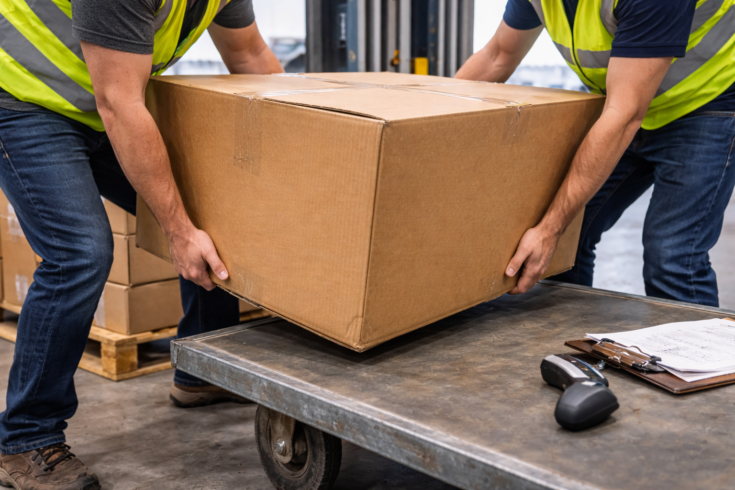
Most packaging is engineered to protect what’s inside—not to be carried. That gap shows up the moment a human has to touch it.
Without a defined, reliable grip point, handling becomes inconsistent. Workers grab wherever they can—edges, flaps, or weak die-cut hand holes that weren’t designed for real load conditions.

What looks fine on a pallet quickly breaks down in motion.

What’s Driving It

  • Lifting requires repositioning, readjusting, and sometimes a second person
  • Standard hand holes deform, tear, or fail under repeated use 
  • Packages shift off balance, increasing the risk of drops
  • Movement slows as each touchpoint becomes a small problem to solve

Operational Impact:

  • Time loss: Handling becomes the bottleneck instead of a quick step
  • Damage risk: Dropped or poorly controlled packages lead to product loss 
  • Labor strain: Awkward lifting increases fatigue and injury risk
  • Inconsistency: No two people handle the package the same way

What to Evaluate

  1. Is there a consistent, repeatable grip point?
  2. Does that point align with the center of gravity?
  3. Does the structure hold under repeated lifts?

March 2026

Some of the most effective packaging improvements don’t require a full redesign—just the right component in the right place. These hidden gems are small, practical parts that help stabilize loads, simplify display setup, and improve in-store presentation with minimal complexity.

Pegboard Fastening Clip

Give retailers the freedom to reposition hooks—without compromising proper backspacing.

The Pegboard Fastening Clip pairs with a standard Christmas Tree Fastener to securely mount pegboard to corrugated displays while keeping spacing consistent for smooth peg performance. No tools required: insert the clips into the display cutouts, then fasten the pegboard through the front into the clips. The result is a cleaner-looking, more functional display—without bulky security bars that distract from your brand.

Stable Stack Clip

Increase the strength and stability of heavy, large-format packs.

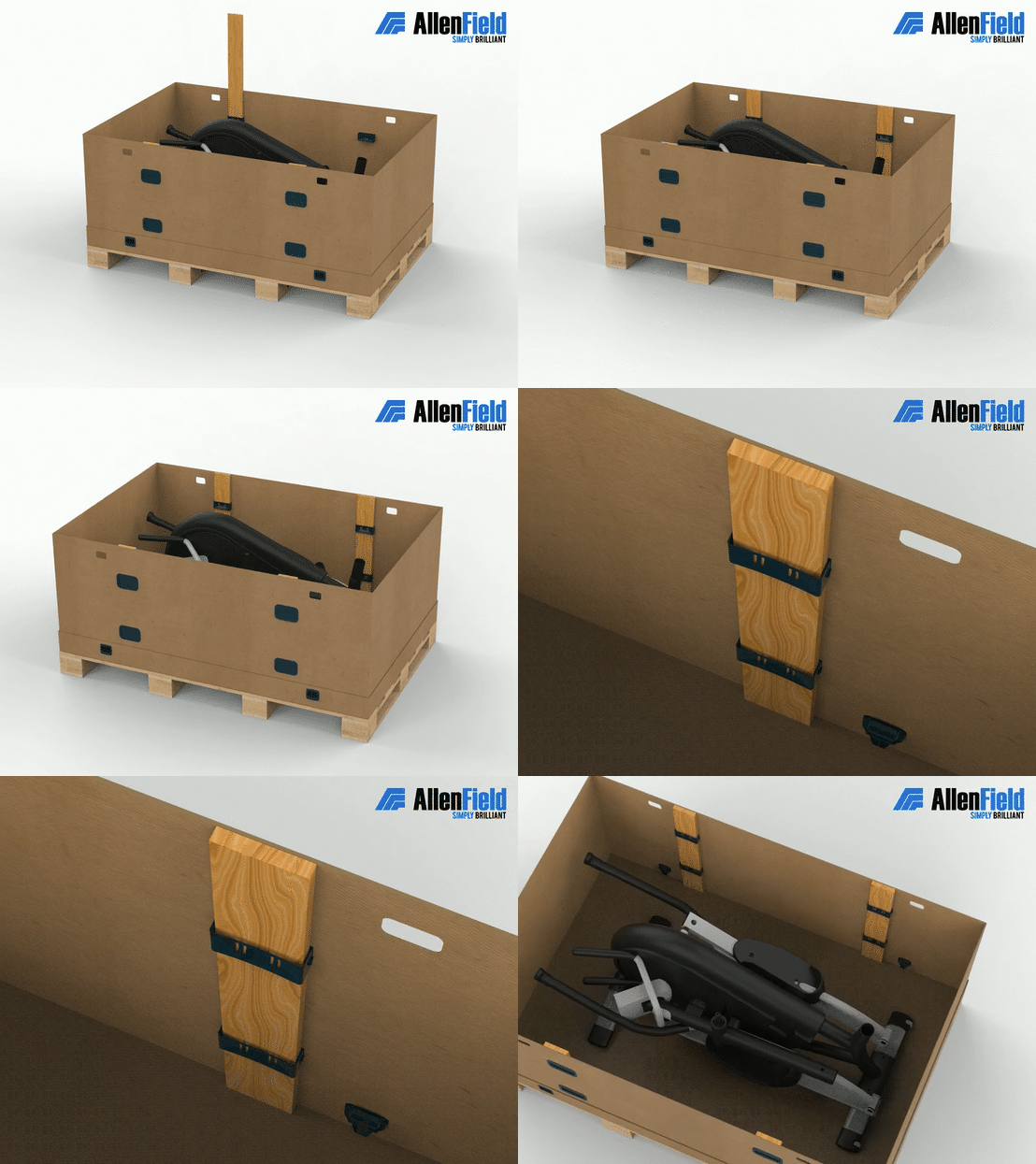
Allen Field’s Stable Stack Clip is an internal reinforcement that helps make corrugated packaging more stable and stackable. Insert the clips through the wall cutouts, then slide wood support boards into each pair from inside the box. In just a few steps, the packaging is stabilized from within—supporting multi-layer stacking with more confidence.

Stack clip

Merchandise Strip

Speed up assembly and reduce store-level rework.

Engineered for retail-ready presentation, the Merchandise Strip delivers 30–40% labor savings during production assembly and helps streamline pack-out without compromising display quality.

The secure hooks keep products in place during shipping so displays arrive intact. Available in 6- and 12-hook configurations.

Jazz Up Your Packaging at Esko World 2026

June 3-5, 2026 | New Orleans

Meet us at Booth #6

Explore Allen Field’s latest innovations and see our integrated components in Esko Artios CAD.

Register Now

Mobility Constraints

Heavy, oversized, and awkwardly shaped packaging or display units slow everything down. When cartons are difficult to transfer, displays can only be set up off-site, and fixtures are hard to reposition, stores lose flexibility, labor costs rise, and the customer experience suffers. 

What looks like a handling issue is often a packaging design problem.

The Challenge

In warehouse and retail environments, immobile packaging and displays create constant friction:

  • Heavy, awkward cartons are hard to grip, lift,  transfer, and carry out of the store
  • Large displays must be set up off-site instead of in-store
  • Display units are difficult to move through aisles and backrooms
  • Handlers struggle to reposition products and layouts as promotions change

All of this increases labor strain, erodes the customer experience, and puts pressure on margins.

Why Immobility Hurts Operations and Customer Experience

When packaging and displays refuse to move, the entire operation pays the price.

Staff spend extra time lifting, dragging, and workaround-handling heavy units instead of serving customers or keeping shelves full. Floor sets and promotions roll out more slowly and at a higher cost because displays aren’t designed to be repositioned. Half-set displays, damaged units, and “we’ll move that later” zones all add up to a cluttered, less inviting environment.

Heavy, hard-to-carry packaging also discourages purchase. Customers may need staff to help them get products to their cars and, once they’re home, it’s still difficult to carry bulky cartons from the car into the house.

Immobility doesn’t just slow operations—it drains labor, lowers the customer experience, and ultimately damages sales.

How Mobility Transforms Operations and Experience

When packaging is equipped for mobility:

  • Displays and cartons with strong handles and wheel systems are easy to lift, roll, and transfer
  • Displays are designed for quick in-store setup and repositioning as needed
  • Display units move smoothly through warehouses and stores, and can be shifted easily for floor cleaning
  • Customers enjoy a better experience moving items from the shelf to the cart, to the car, and into their homes

Mobility turns packaging and displays from obstacles into tools—supporting faster operations, delivering a better experience for both teams and customers, and ultimately lifting sales.

Products That Solve This

Mobility Components

Display Mobility Aids

Custom Options

Ergonomic Risk & Usability Gap

When packaging is hard to carry, open, or lift safely, strain and accidents go up—and satisfaction drops. Workers fight flimsy hand holes, sharp tools, and oversized cartons that turn every lift into a strain risk. Customers wrestle with tear strips, dig into weak cutouts, and lift boxes that never feel secure, in the aisle and again at home. 

What’s usually blamed as “mishandling” actually starts upstream.

The Challenge

When boxes are large, heavy, or hard to handle, small problems add up fast:

  • Cartons are hard to grip, lift, and carry
  • Awkward handling increases the risk of workplace lifting injuries
  • Packaging is difficult to open and close safely
  • Consumers get frustrated before they even reach the product
  • Boxes are hard to maneuver in warehouse, on the sales floor, and at home

Strains, pinched fingers, near-drops, and damaged packs quietly erode brand trust.

The Cost of Hard-to-Handle Packaging

When packaging isn’t ergonomic, efficiency drops and brand perception suffers. 

Awkward grips, sharp edges, and unbalanced cartons slow handling and increase strain—raising injury risk, absenteeism, and turnover. Customers feel it too: packs that are hard to lift, carry, or open feel cheap and frustrating, and torn flaps, crushed corners, and “exploding” boxes drive mess, returns, and lost trust. 

Over time, routine handling becomes extra labor—and shopping becomes a series of small irritations.

What Changes When Packaging Is Easier to Use

When packaging is designed for easy access and ergonomic handling:

  • Cartons have secure grips, handles, or reinforced hand holes, making them easier to lift and carry
  • Ergonomic lift points reduce awkward postures and help lower the risk of workplace lifting injuries
  • Easy-open and reclose features save time and eliminate the need for knives or wrestling with the carton
  • Shoppers can reach the product quickly and confidently, leaving a lasting positive impression of the brand
  • Stocking and transport are simplified as boxes are easier to move, position, and manage

With access and ergonomics built in from the start, packaging actively supports safety, efficiency, and customer satisfaction.

Products That Solve This

Carrying Components

Access & Opening Solutions

Ergonomic Aids

Custom Options

  • Tailored handle shapes, grips, and widths
  • Ergonomic access designed for large packaging

Retail Presentation Breakdowns

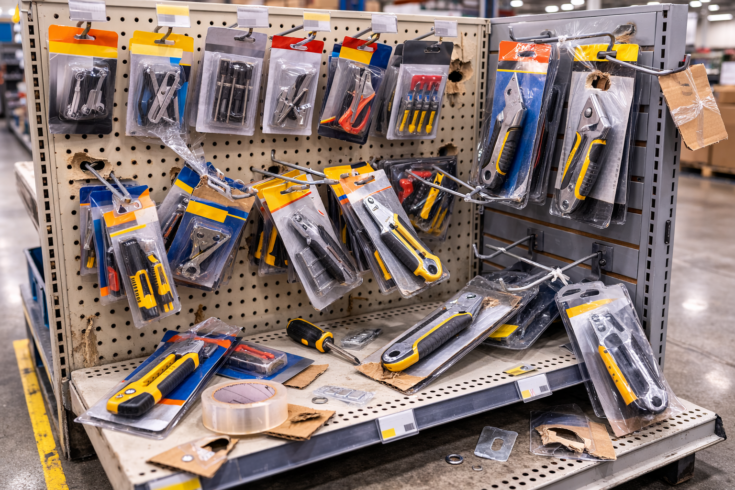
Displays are expected to hold, align, and perform under load—but in retail, failure is usually gradual. Pegs sag, headers tear, and products drift out of alignment until the display no longer presents the brand as intended. Store teams make it work by resetting shelves, adding tape, or replacing parts.

What appears to be a merchandising issue is often a design-and-structure issue.

The Challenge

In retail environments, breakdowns typically show up as:

  • Products  that are difficult to hang, display, or reach
  • Displays losing alignment as product weight increases
  • Packaging materials deforming under sustained or uneven load
  • Products slipping, falling, or becoming unsafe
  • Frequent maintenance to restore appearance
  • Pilferage

The failure isn’t dramatic. It’s cumulative.

How Retail Packaging Degrades from Transit to the Sales Floor

Retail packaging and displays don’t usually fail overnight—they degrade through shipping, handling, and daily use. What looks great on day one may not be built for sustained load, uneven stocking, or repeated interaction, so alignment drifts, materials deform, and safety margins shrink. Allen Field evaluates performance before the display ships from the manufacturer, in-store, and after weeks of real-world interaction—from transit through the sales floor—so presentation holds without constant resets.

What Changes When Displays Are Designed for Real Conditions

When display hardware is designed around load and handling:

  • Products are easy to hang and grab
  • Alignment holds even as product weight changes
  • Packaging resists deformation over time
  • Safety and appearance improve together
  • Maintenance drops without sacrificing visibility
  • Pilferage is reduced

Performance becomes part of the presentation.

Related Case Studies & Blog Posts

Corrugated Pegboard Fastening Clip
A custom fastening clip maintained spacing and structural integrity in fully loaded corrugated pegboard displays.

Leading North American Hardware Manufacturer
Reinforced hanger and header solutions prevented tearing and product fallout across high-volume retail environments.

Curtain Display Hangers for a Better Customer Experience
A closed-hook hanger design improved product retention and alignment during repeated customer handling.

Is Pilferage at Retail Costing You Money?

Use the Plastic Display Kit to Avoid Packaging Damages

Reuse Breakdowns

When packaging meant for reuse or repeated access does not withstand the supply chain environment, failure compounds quickly — operationally, financially, and perceptually.

What looks like “normal wear and tear” is often just under-engineered strength and no real plan for reusability.

The Challenge

Packaging designed for reuse often fails under real-world handling, repeated openings, and multi-touch supply chain cycles:

  • Boxes that should last multiple cycles fail after one use
  • Panels tear, corners weaken, and connection points degrade over time
  • Repacking, reinforcement, and carton replacement increase labor and material costs
  • Damage during returns, repairs, and inspections shortens packaging life
  •  Shifting contents and reduced structural integrity increase product risk
  • Inconsistent durability creates inefficiencies across warehousing, retail, and reverse logistics

All of these quietly drive up material spend, labor, and damage while blocking more sustainable, circular packaging programs.

Why Do Reusable Package Designs Fail

Strapping, glue, tape, and staples often fail in reusable packaging because they are inherently designed for single-use sealing rather than repeated opening, handling, and resealing. Each cycle of inspection, returns, or repairs weakens the package—tape loses adhesion, glue tears corrugated fibers, staples puncture and degrade structure, and strapping can cut into carton walls under load. Over time, this progressive damage leads to panel separation, inconsistent resealing, and reduced structural integrity. In real supply chain environments with vibration, stacking pressure, and frequent handling, these methods also require labor-intensive rework and create safety concerns, ultimately increasing costs and shortening the effective life of packaging meant to be reused.

What Happens When The Right Components Are Used

  • Replace single-use sealing (tape, glue, strapping, staples) with repeatable connection components
  • Allow packaging to be opened and reclosed without tearing fibers or weakening panels
  • Maintain structural integrity through repeated handling, inspections, and returns
  • Reduce carton damage caused by cutting, puncturing, or over-tensioning traditional methods
  • Minimize rework by eliminating repeated taping, stapling, and re-strapping
  • Support consistent performance under vibration, stacking pressure, and movement
  • Improve durability across the full supply chain lifecycle
  •  Make packaging easier to carry, handle, and reuse without compromising integrity
  • Extend the usable life of packaging while reducing replacement cartons and labor

February 2026

Design sustainability into the carry experience. These Kraft paper handles support single-stream recycling and integrate seamlessly into corrugated structures for a strong, consistent carry interface—an excellent choice for eco-conscious packaging.

Bamboo Style Paper Handle with Kraft Base

Made from 100% natural material, this paper handle with a kraft base delivers a bamboo-like aesthetic while providing a practical, design-ready carry option for corrugated packaging. Offered in multiple sizes to match your box geometry and load requirements, it integrates cleanly across a range of box styles. For high-volume lines, automated application equipment is available to support fast, consistent placement.

Bamboo Handles

Bamboo Style Kraft Paper T-Handle

This Kraft Paper T-Handle delivers a bamboo-like appearance that adds an eco-friendly cue to the pack—ideal for brands with a green brand image. Paired with our Kraft T-Handle Support Plate, it creates a reliable carry solution that helps distribute load at the attachment point while supporting single-stream recyclability goals.

Kraft T-Handle Support Plate

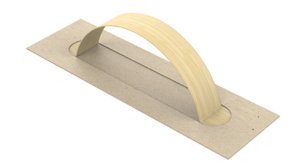
Made from premium-quality, all natural material, our Kraft T-Handle Support Plate is a simple design upgrade that improves how carry loads are managed in the box panel. By spreading force over a wider area, it helps reduce localized stress around the cutout and supports a cleaner, more consistent handle interface during handling.

Expo Empaque Norte

March 25-27, 2026 | CINTERMEX | Monterrey, Nuevo León, México

Meet us at Booth #245

Discover our Simply Brilliant components—plastic handles, box connecting clips, hooks, hangers, and POP display accessories. Plus, explore our new paper and kraft line designed to support single-stream recycling.

Register Now

Assembly Bottleneck

Nothing slows down a production line faster than when packaging becomes the bottleneck instead of the final step. When a finished product takes longer to pack than it does to manufacture, efficiency drops, costs rise, and frustration builds across assembly and fulfillment teams.

Bulky, multi-component products—like exercise equipment and large retail-ready units—are especially challenging. Without the right packaging design and components, teams are forced to improvise, handle parts multiple times, and work around packaging that wasn’t built for real-world workflows.

Accurate and efficient fulfillment into store-ready displays is just as critical. Missed steps, inconsistent packing, or difficult-to-open designs can delay outbound shipments and slow product movement through distribution channels.

AF addresses these challenges with both off-the-shelf and custom components engineered around the customer’s workflow. Rather than treating packaging as an afterthought, our components are designed to support assembly flow, simplify packing, and maintain package integrity from line to retail—helping products move out the door faster, cleaner, and with fewer touchpoints.

The Challenge

In constrained assembly and packaging environments, the same issues show up repeatedly:

  • Packaging time exceeding assembly time, creating a production bottleneck
  • Bulky, multi-component products that are difficult to secure and organize during packing
  • Inconsistent fulfillment into store-ready displays requiring precision and repeatability
  • Excess handling and rework caused by packaging not designed for real assembly workflows
  • Risk of damage, misalignment, or delays when packaging systems don’t match product size and movement during transit

Each additional touch increases cycle time, fatigue, and the probability of error.

What Changes When Components are Designed for the Line

When components are engineered around the actual assembly sequence, parts locate themselves instead of needing to be positioned, fewer touches are required to achieve repeatable results, and operators spend their time assembling—not correcting. Throughput improves without adding headcount, and the line moves faster once friction is removed.

Products That Solve This

Clips & Connectors

Snap-in clips
• Quick-insert handles
• Tool-free spacers

Rework & Access Solutions

• Reclose inspection clips
• Easy-open closures

Automation-Compatible Solutions

Handles designed for semi- or fully-automated insertion
• Clips compatible with assembly machinery

Custom Options

• Assembly-optimized variants of existing components
• Modified geometries for equipment compatibility

Case Studies

Allen Field Helps Packaging Company Overcome Bicycle Packaging Challenges
Custom handling hardware eliminated manual lifting and reduced assembly-line congestion during bicycle packaging.

Frustration-Free Component That Saves Assembly Time
A snap-in hook design reduced application time and eliminated the need for tools or secondary fastening steps.

Replaced Styrofoam to Save Labor, Space, and Increase Yields Per Truckload by 60%
Redesigned packaging hardware reduced line delays caused by bulky, inefficient foam handling.

Damage In Transit

When Packaging Arrives Damaged, It’s More Than a Visual Problem

Damaged packaging doesn’t just hurt presentation — it raises immediate concerns about what’s happening inside the box. When packaging is crushed, torn, or compromised, the likelihood of internal product damage, shifting during transit, or even potential tampering increases.

Even if the product is technically intact, perception changes fast. Customers, retailers, and warehouse teams often assume the contents may be compromised, which leads to inspections, hesitation to accept shipments, and higher return rates.

Operationally, this creates friction across the supply chain:

  • Extra handling and inspections
  • Preventative returns
  • Repacking and replacement costs
  • Delays in stocking or deployment

Most importantly, damaged packaging erodes trust. Packaging is the first indicator of product integrity. If it arrives weakened, the product inside is immediately viewed as higher risk — regardless of its actual condition.

Strong packaging design isn’t just about protection. It’s about preserving product integrity, preventing tamper concerns, and ensuring the product is received exactly as intended.

The Challenge

Across manufacturing and distribution environments, the same patterns repeat: 

  • ISTA testing validates design intent, but it represents a controlled sample of real distribution conditions
  • Limited test cycles may not fully capture long-term variability across scale, handling frequency, and mixed transit environments
  • Repeated handling, vibration, and load shifts introduce cumulative stresses that are difficult to replicate in short validation runs
  • Small inconsistencies at connection and containment points can compound over thousands of shipments
  • Packaging that performs well in testing can still experience performance drift once deployed at volume
  • Strapping can damage corrugate, crush edges, and create pressure points that weaken the package over time
  • Staples introduce safety risks during packing, unpacking, and repeated access, increasing the potential for worker injury
  • Disposable securing methods (strap, tape, staples) often degrade with repeated handling, even when the structural design is sound
  • Designers are solving for structure and protection, while real-world performance is also influenced by how the package is secured, accessed, and handled throughout the supply chain
  • The result is rarely a flawed design, but a gap between controlled validation and scaled, real-world distribution conditions

The longer the transit path, the more these weaknesses compound. What survives the first shipment often fails on the second or third.

Beyond ISTA: What Happens at Scale

Transit issues rarely stem from poor packaging design. Most packaging systems are carefully engineered and validated through ISTA testing with the right intent and methodology.

However, ISTA testing is a controlled representation of real distribution. Over scale, repeated handling, vibration cycles, and variability across the supply chain can introduce stresses that may not fully surface in limited validation runs. A package can be structurally sound and still show performance drift once deployed at volume.

With few exceptions, Allen Field components are not the primary structure of a package. Instead, they function as integrated connection and containment elements that support how a well-designed package holds together in real-world conditions — particularly through handling, transport, and repeated use.

A practical way to evaluate their contribution is side-by-side testing: the same validated packaging design, tested with and without integrated components under identical ISTA protocols and real handling simulations. This isolates how consistency at connection and containment points influences performance over time and scale.

Products That Solve This

Clips & Connectors

Box connecting clips
Panel locks
Stabilizers
Reinforcement clips
Reclose inspection clips (for repeated access without damage)

Carrying Solutions

Handles that reduce strain on packaging walls

Custom Options

• Reinforcement designs for weak corrugated areas
• Anti-load-shift custom components

Case Studies

Using Box Connecting Clips to Enhance Packaging Integrity
Custom connecting clips prevented cartons from opening and shifting during repeated handling across the supply chain.

Allen Field Helps Packaging Company Overcome Bicycle Packaging Challenges
Custom handling hardware eliminated manual lifting and reduced assembly-line congestion during bicycle packaging.

January 2026

TL15 Twistlok Clip

Twist. Lock. Done.

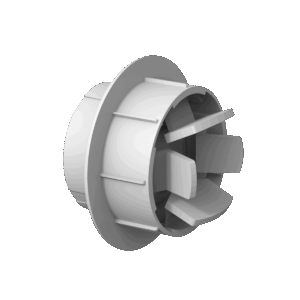
Meet the TL15—a tool-free fastener that secures two corrugated panels (up to 0.59″ combined thickness) with a quick twist-to-lock. Four inner tabs eliminate gaps for a tight, reliable closure—no tape, no blades, less waste.

Using a simple circular cutout, it installs and removes in seconds, enabling reusable packaging and more efficient, sustainable workflows.

Benefits:

  • Unlimited open/reclose — streamlines assembly, QC, and returns
  • Enables corrugate reuse — use boxes multiple times to lower replacement costs
  • Faster handling — tool-free install/removal speeds line operations

  • Eco-friendly — recyclable and reusable

DID YOU KNOW

Why designers choose our Elliptical Handles

These handles work with your existing box die-cuts, so you can refresh packaging without losing strength or durability. Clean, contemporary, and retail-ready—the Elliptical Series comes in 6″–26″, carries 20–100 lbs, and can be customized with colors, effects, and logo imprints.

Our Longest Elliptical Handles

26″ Elliptical Side-Mount Handle

Built from durable materials and rated to 60 lbs., this side-mount handle ships standard in translucent and can be customized in other colors, with or without logo imprint.

23″ Elliptical Side-Mount Handle

Rated to 50 lbs, the 23″ handle comes in black, white, and translucent, plus custom colors on request. Add sparkling glitter or pearl effects and logo imprints for on-brand presentation.

Meet Allen Field at the Tradeshows

Discover how reusable clips, ergonomic hand holes, all-natural kraft handles & hangers, and retail-ready display hardware reduce damage, accelerate handling, and cut waste. Bring your challenge—we’ll map fast wins for your 2026–2027 roadmap!

MD&M West/West Pack: Booth #5655 | February 3-5, 2026 | Anaheim, CA

Register for free, use promo code: INVITE9604

Pack Expo East: Booth #306 | February 17-19, 2026 | Philadelphia, PA

Register for free, use promo code: 42Q37

Where Packaging Fails—and How to Fix It (II)

In our previous post, we covered three common breakdowns and how to avoid them. Today, we’re tackling three more pain points that quietly drain time and margins:

Off-the-Shelf Misfit, Inconsistent Supply, and Changeover Pain when you’re trying to improve workflow without slowing the business.

1) Off-the-Shelf Misfit

The pain: Standard parts rarely match real-world constraints—your board stack, flute, cutout geometry, load case, or ergonomic targets. Teams “make it work” with extra tape, ad-hoc cuts, or awkward installs that create failure points later.

Fix the root cause: Design for your exact needs.

Allen Field offers clips, reinforcements, and carry handles sized to your board thickness and use case. We fit parts to your material, check clearances, ensure the load is supported correctly, and confirm with pilot samples—so when you scale up, there are no surprises.

Operational wins: Easier installs, fewer workarounds, repeatable performance—and a package that behaves the same on a Tuesday afternoon as it does during peak.

2) Inconsistent Supply

The pain: Offshore delays and sourcing disruptions create production risk. Lead times slip, schedules shuffle, and teams burn time chasing parts instead of building product.

Fix the root cause: Diversify sources and standardize on spec-true parts you can get reliably.
Allen Field supports multi-source availability and domestic stocking on core clips, handles, and display hardware—so you’re not waiting on a single lane. We help you cross-reference equivalents, lock in forecast-based inventory, and set pilot kits so critical builds aren’t held up by missing components.

Operational wins: More predictable schedules, fewer line stoppages, faster recoveries—and less time firefighting.

3) Changeover Pain

The pain: New components often require engineering support most suppliers don’t provide—so teams hesitate to make changes even when the ROI is obvious. CAD redraws, spec confusion, and training gaps stall adoption.

Fix the root cause: Remove roadblocks with tools and support.PP606 in ArtiosCAD
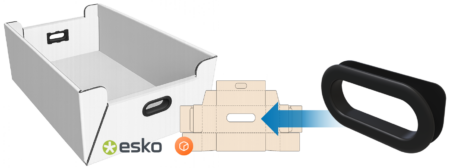
  • CAD-native parts: Allen Field components are natively available in Esko ArtiosCAD (Nov ’25 release), so you can drop clips, handles, and aids into 3D and auto-sync your dieline to spec.
  • Selection guides & sample kits: Quick sizing tools, curated sample packs, and test protocols shorten validation.
  • Process-ready hardware: Tool-free box connecting clips for repeat access (QA/returns), clips and corners for flap control, hand-hole protectors for safer lifts, and semi-auto EnviroHandle applicators for speed and consistency—without a full automation overhaul.

Operational wins: Faster changeovers, fewer reworks, quicker time-to-value—and a confident switch you can scale.


Ready to move?

When hardware fits and holds, boxes stay intact, shelves stay tidy, and lines keep moving. You protect the product and the box—reducing waste, lowering costs, and improving the experience for customers and teams.

Build a line that flows, not fights. With the right components—and a partner who supports the switch—you protect the product, preserve the box, and improve the experience end-to-end.


Where Packaging Fails—and How to Fix It (I)

Three common breakdowns (and the hardware that stops them): transit damage, messy retail presentation, and assembly bottlenecks.

Packaging failures rarely start as big problems. They start as small mismatches: hardware that doesn’t quite fit, closures that slow access, hooks that don’t hold under load. Left alone, those mismatches become returns, rework, and lost sales. Here’s how to address the root causes with purpose-built components.

1) Damage in Transit: When Fit and Hold FailStack clip

The pain: Boxes open, panels bow, and products shift or break. Tape and strapping hide the issue for a moment, then create new ones—knife hazards, scarred cartons, and slower receiving.

Fix the root cause: use spec-true structure and carry.

  • Box connecting clips, panel stabilizers, and reinforcement clips keep geometry tight and joins secure—without single-use strapping.
  • Hand-hole protectors and ergonomic handles distribute load across the corrugated panels, reduce tearing at cutouts, and guide proper lifts.

Operational wins: fewer damages and returns, faster checks at the dock, cleaner cartons that can be reused in reverse flows.

2) Retail Presentation Breakdowns: When Hardware Doesn’t Hold the Look

The pain: Hooks slip, hangers bend, and facings go crooked. Staff spend time rehanging instead of helping customers, and shelves look tired even when product is great.

Fix the root cause: spec for alignment and load.

  • Precision-designed plastic hooks and hangers hold steady, keeping products planogram-aligned.
  • Kraft hangers & hooks provide a paper-based alternative that supports sustainability goals while maintaining clean presentation.

Operational wins: tidier facings, faster resets, fewer fixes—and a better shopper experience that protects sell-through.

3) Assembly Bottlenecks: When Traditional Materials Slow the Line

The pain: On the manufacturing line, during shipment prep, at QC, or in returns—tape, strapping, and blades interrupt flow. Teams fight flaps, cut and re-tape boxes, and create preventable rework.

Fix the root cause: make access repeatable.

  • Innovative box connecting clips facilitate assembly and allow clean open/close, again and again, without damaging cartons.
  • Because access is tool-free and repeatable, teams move faster across build, inspection, and return loops.

Operational wins: less labor, less rework, faster throughput—and carton boxes that survive multiple cycles.

Explore products that streamline assembly, QC, and returns.


How to Choose the Right Mix

  1. Map the friction: transit, retail, process—or a combination.
  2. Stabilize structure first: select the right fastener/reinforcement for your corrugated panels.
  3. Distribute the load: add handhole protectors or handles to protect cutouts and workers.
  4. Match the display task: choose solutions that are secure, ship-ready, floor-ready, and user-friendly—while adding brand value.
  5. Pilot and measure: track damages, rework minutes, and return condition to validate the change.

The Payoff

When hardware fits and holds, boxes stay intact, shelves stay tidy, and lines keep moving. You protect the product and the box—reducing waste, lowering costs, and improving the experience for customers and teams.

Design for fit. Ship with confidence. Present with clarity. Keep the line flowing. With the right components, you can do all four.

Request A Quote